

Imagine a dish that wraps you in a cozy embrace of flavor—savory, slightly sweet, and delightfully spicy. Say hello to Mongolian Ground Beef Noodles, a culinary symphony that plays on your taste buds like a well-loved melody. This recipe is a simple yet sophisticated take on the classic Mongolian beef, reimagined with ground beef and noodles for a quick and satisfying meal.
If you’re a fan of those takeout nights where the aroma of soy, ginger, and garlic fills the air, then this dish will feel like a warm hug from an old friend. The ground beef brings a rich, hearty depth that marries perfectly with the silky noodles, all bathed in a glossy sauce that’s as addictive as it is delicious. It’s a dish that’s unapologetically bold, with a touch of sweetness from brown sugar that balances the savory notes expertly.
Why should you whip up this tantalizing treat, you ask? Well, aside from the fact that it tastes like a dream, it’s also wonderfully easy to make. Perfect for a weeknight dinner, this recipe requires minimal prep and can be served up in under 30 minutes. It’s ideal for those nights when you crave something comforting yet don’t want to spend hours in the kitchen. Don’t worry if you’re not a seasoned chef; this recipe is beginner-friendly, with straightforward steps that even the most novice cook can master.
So, whether you’re looking to impress your family or simply want to indulge in a quick culinary escape, Mongolian Ground Beef Noodles is your ticket to a flavor-packed adventure. Grab your chopsticks and get ready to dive into a dish that’s sure to become a staple in your dinner rotation.
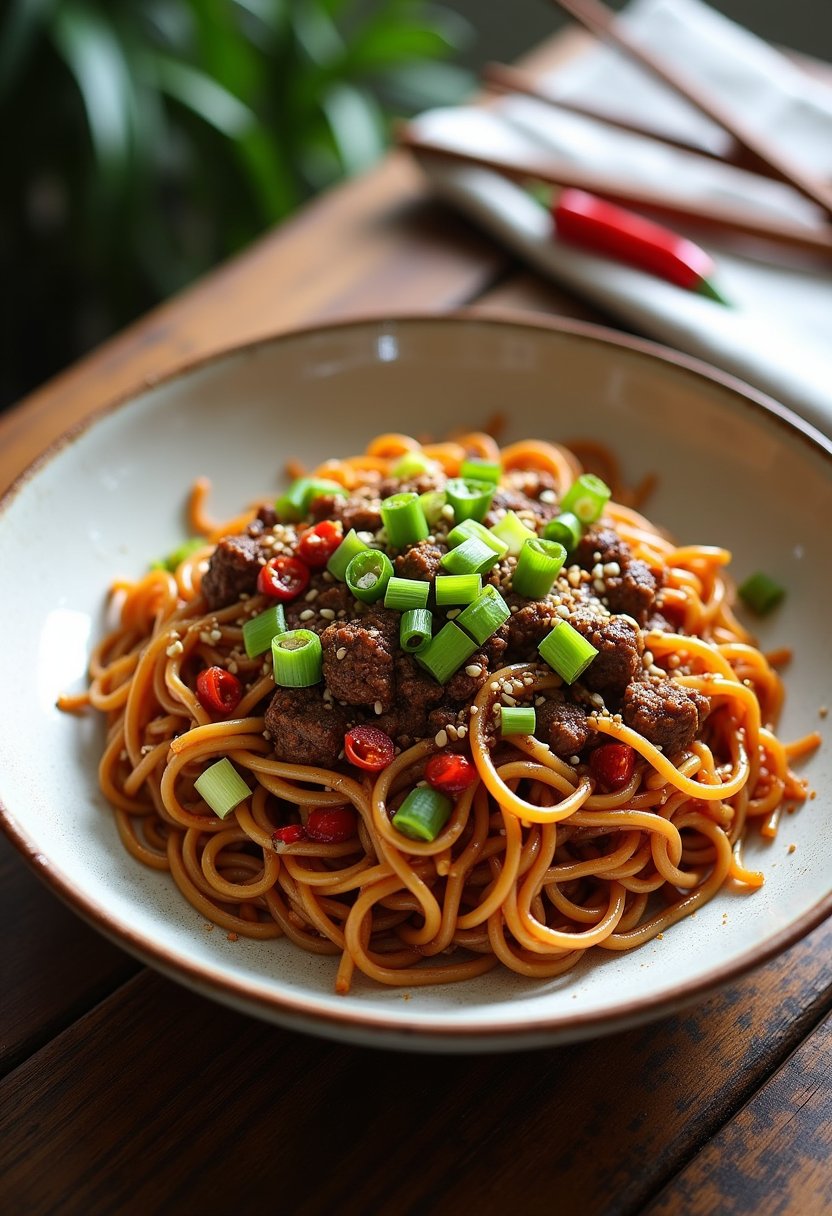
The Story Behind This Recipe
Picture this: a bustling Mongolian market, where the air is thick with the aroma of sizzling meats and the chatter of vendors selling everything from handmade trinkets to fresh produce. While you might be tempted to think that our Mongolian Ground Beef Noodles recipe comes straight from this vibrant scene, there’s a twist in the tale. Spoiler alert: it doesn’t actually hail from Mongolia.
The dish we affectionately call “Mongolian” has roots more akin to the inventive kitchens of American-Chinese cuisine. It was popularized in the United States as a way to bring the bold, savory flavors of Mongolian barbecue to a wider audience. The term “Mongolian” became synonymous with a particular sweet and savory sauce, typically pairing soy sauce, brown sugar, and garlic, rather than a specific regional dish from Mongolia itself.
As for noodles, well, they are a delightful addition that speaks to the heart of Asian culinary tradition. Noodles have long been a staple across various Asian cultures, each with its own twist and texture. In our recipe, ground beef takes center stage, providing a hearty, protein-rich element that’s both comforting and filling. This is a dish that brings together the simplicity of everyday ingredients with the allure of exotic flavors, creating a fusion that’s both accessible and deeply satisfying.
The Mongolian Ground Beef Noodles recipe is a testament to culinary creativity—a dish born from the melding of cultures, designed to please the palate with minimal fuss. So, while you may not find it being whipped up on the steppes of Mongolia, its essence is a celebration of the cross-cultural culinary exchanges that make food such a delightful adventure.
Kitchen Gear You’ll Need
When it comes to crafting a delightful dish like Mongolian Ground Beef Noodles, having the right kitchen gear at your disposal can elevate the cooking experience from a mundane task to a culinary adventure. Let’s explore the essential tools you’ll need to whip up this savory, aromatic meal.
Wok or Large Skillet
First and foremost, a wok or a large skillet is indispensable. The high sides and wide base of a wok are perfect for stir-frying, allowing the ingredients to cook evenly and quickly over high heat. If you don’t have a wok, a large non-stick skillet will do the trick. Just make sure it’s big enough to accommodate all the ingredients without overcrowding, which might otherwise lead to steaming instead of proper frying.
Sharp Chef’s Knife
Next on the list is a sharp chef’s knife. You’ll need this trusty tool for mincing garlic, slicing the scallions, and chopping any other veggies you decide to toss into the mix. A dull knife is not only a safety hazard, but it also makes prep work unnecessarily tedious. So, sharpen up before you start!
Cutting Board
A sturdy cutting board will be your best friend here. Opt for one with a non-slip base to prevent any unexpected dance moves on your countertop. A wooden or plastic board is just fine; just ensure it’s clean and dry before you begin.
Measuring Cups and Spoons
Precision is key when it comes to balancing the sweet, salty, and umami flavors of this dish. Measuring cups and spoons will help you get the proportions just right, ensuring that every bite is as flavorful as the next.
Pasta Pot and Strainer
For the noodle component, a good-sized pasta pot is essential. You’ll need enough space for the noodles to swim freely, ensuring they cook evenly. Pair it with a trusty strainer to drain the noodles without losing any in the sink—a noodle down the drain is a tragedy no one wants to face.
Wooden Spoon or Spatula
Finally, a wooden spoon or spatula is ideal for stirring your ground beef and noodles. Its gentle touch ensures nothing sticks to the pan, and it’s great for folding in ingredients without breaking them apart.
With this arsenal of kitchen gear, you’re well on your way to creating a Mongolian Ground Beef Noodles dish that not only satisfies your taste buds but also makes the cooking process a breeze. Happy cooking!
Ingredients
For the flavorful and comforting Mongolian Ground Beef Noodles, you’ll want to gather a delightful array of ingredients that promise to elevate your kitchen game. Let’s dive into what you’ll need, with a few helpful tips and substitutions along the way.
For the Noodles:
- 250g (8.8 oz) of dried lo mein noodles: These noodles soak up flavors beautifully. If lo mein isn’t available, you can substitute with spaghetti or linguine. Just remember, the texture might be slightly different, but it’ll still be delicious!
For the Beef Mixture:
- 500g (1.1 lb) of ground beef: Opt for a lean variety (around 85% lean) to avoid excess grease. If you’re feeling adventurous or health-conscious, ground turkey or chicken can be used as alternatives.
- 2 tablespoons of vegetable oil: This is for browning the beef. Go for a neutral oil like canola or sunflower oil.
For the Sauce:
- 60ml (1/4 cup) of low-sodium soy sauce: Regular soy sauce can be too salty, so choose low-sodium to better control the dish’s saltiness.
- 60ml (1/4 cup) of hoisin sauce: This provides a sweet and tangy depth. If unavailable, a mix of barbecue sauce and a dash of soy sauce can mimic its flavor.
- 2 tablespoons of brown sugar: This adds a touch of sweetness that balances the savory elements. Light or dark brown sugar will do.
- 2 cloves of garlic, minced: Fresh garlic is key for that authentic punch. A garlic press can save you some time if you have one.
- 1 tablespoon of fresh ginger, grated: Ginger adds warmth and complexity. If fresh ginger isn’t handy, 1/4 teaspoon of ground ginger can substitute, but fresh is always best!
- 1/2 teaspoon of red pepper flakes: Adjust according to your heat preference. These give a gentle kick without overpowering the dish.
For Garnish:
- 3 green onions, sliced: They bring a fresh, oniony finish. Slice them thinly for a delicate touch.
- 1 tablespoon of sesame seeds: Toast them lightly in a dry pan for an extra nutty flavor. If you’re out, chopped peanuts can add a similar crunch.
- Fresh cilantro leaves: Optional, but they add a bright, herbal note that beautifully contrasts the savory beef.
Remember, quality ingredients make a world of difference, so choose fresh where possible. And don’t forget to have fun—cooking is as much about enjoying the process as it is about the delicious result!
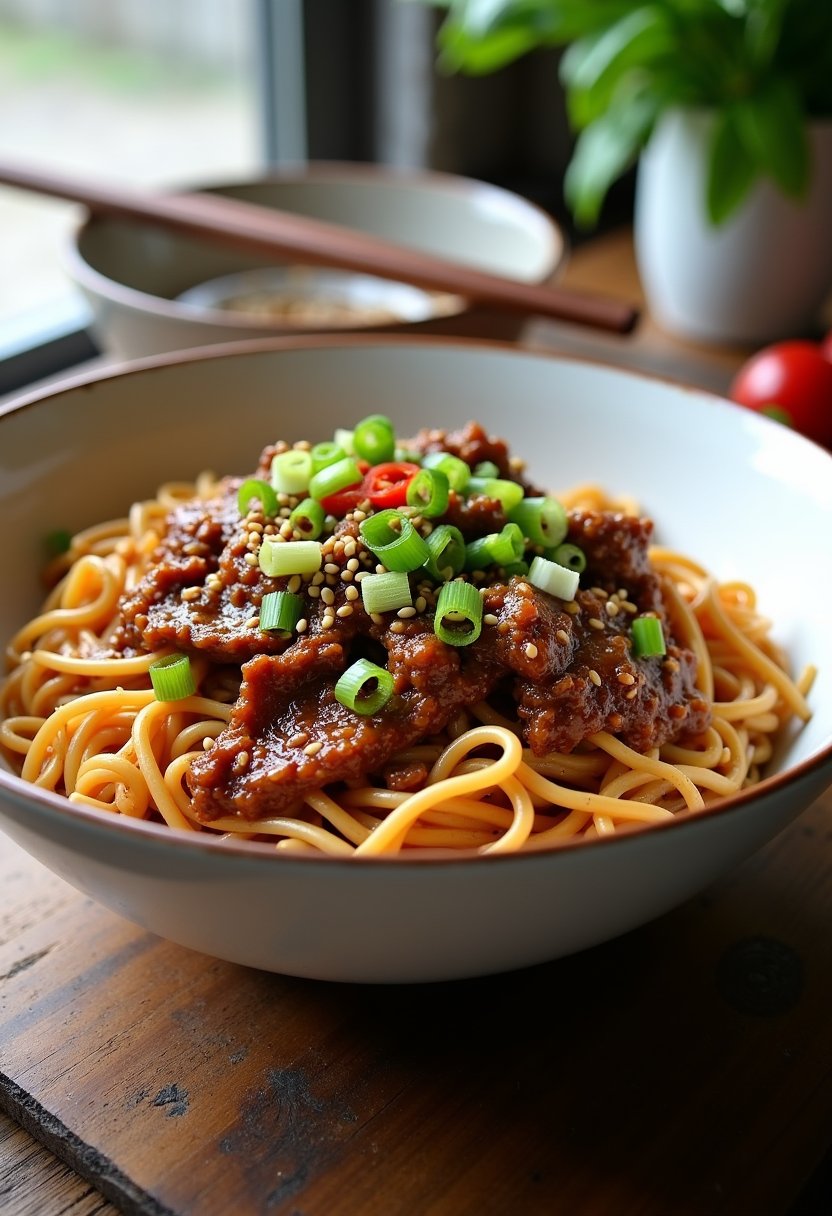
Step-by-Step Instructions
- Gather Your Ingredients and Equipment
First, round up everything you’ll need: a large skillet or wok, a pot, a colander, a sharp knife, a cutting board, and a wooden spoon or spatula. Gather 500 grams (about 1 pound) of ground beef, 250 grams (8 ounces) of dried noodles (lo mein or spaghetti work well), 3 cloves of garlic (minced), 1 tablespoon of fresh ginger (grated), 60 ml (1/4 cup) soy sauce, 60 ml (1/4 cup) brown sugar, 2 tablespoons oyster sauce, 1 tablespoon sesame oil, 1/4 teaspoon red pepper flakes, and 3 green onions (sliced). A dash of humor, optional. - Cook the Noodles
Bring a large pot of water to a rolling boil, then add the noodles. Cook according to the package instructions, typically 6-8 minutes, until they are al dente—firm to the bite but not crunchy. Drain in a colander and rinse with cool water to stop them from sticking together. Set aside. If you listen closely, you might hear the noodles sigh with relief! - Brown the Beef
In your skillet or wok, heat 1 tablespoon of sesame oil over medium-high heat. Add the ground beef, breaking it up with your wooden spoon as it browns. Cook for about 5-7 minutes, or until no pink remains. The beef should be sizzling and slightly crispy on the edges. Drain excess fat if necessary, but leave a little for flavor. A hint: if your kitchen starts to smell like a backyard barbecue, you’re doing it right. - Add Aromatics
Reduce the heat to medium, then toss in the minced garlic and grated ginger. Stir constantly for about 1 minute until fragrant. Be careful not to burn them; you want a heavenly aroma, not a smoky surprise. - Mix the Sauce
In a small bowl, whisk together the soy sauce, brown sugar, oyster sauce, and red pepper flakes. Pour this mixture into the skillet, stirring to coat the beef evenly. Let it simmer for 2-3 minutes, allowing the flavors to meld. The sauce should be slightly thickened and glossy, clinging to the beef like a cozy blanket. - Combine the Noodles and Beef
Add the cooked, drained noodles to the skillet. Toss everything together with your spatula or tongs until the noodles are well-coated with the sauce and beef mixture. Cook for another 2-3 minutes until everything is heated through. If your noodles could sing, they’d be belting out a harmonious tune at this stage. - Garnish and Serve
Sprinkle the sliced green onions over the top for a pop of color and a fresh bite. Give it one last toss. Serve immediately, hot and steaming. If you’re feeling adventurous, add a sprinkle of sesame seeds for extra crunch. Enjoy your Mongolian Ground Beef Noodles, a dish that’s as easy to make as it is to devour!
Tweaks and Additions
Ah, the Mongolian Ground Beef Noodles—an irresistible dish that combines savory goodness with the comforting embrace of noodles. But what if you want to shake things up a bit? Fear not, adventurous culinary explorer! Here are some delightful tweaks and additions to make this dish your very own masterpiece.
1. Spice It Up
For those who like a bit of kick in their meals, adding a touch of heat can transform this dish. Consider tossing in a tablespoon of Sriracha or a sprinkle of red pepper flakes. The heat complements the sweet and savory notes, creating a more dynamic flavor profile. If you prefer fresh ingredients, finely chop a red chili and sauté it with the garlic and ginger. No need to adjust cooking times—just prepare for a bit of extra sizzle in your mouth!
2. Veggie Delight
Vegetables are a wonderful way to add color and nutrition. Try adding thinly sliced bell peppers, snap peas, or broccoli florets. Toss them in with the onions and let them cook until they’re tender-crisp, which should only add about 3-4 minutes to your cooking time. Not only will this add a delightful crunch, but it will also make your dish pop with vibrant hues.
3. Gluten-Free Noodles
For those with gluten sensitivities, swapping the traditional wheat noodles for rice noodles or gluten-free pasta is a simple yet impactful change. These alternatives cook a bit differently—rice noodles, for instance, often benefit from a quick soak in hot water rather than boiling. Just be sure to follow the package instructions to avoid mushy noodles. The sauce thickens beautifully regardless, so there’s no need to adjust the recipe otherwise.
4. Meat Swap
If beef isn’t your protein of choice, or you’re catering to a more plant-based crowd, you can easily substitute ground beef with ground turkey or even a plant-based ground meat alternative. Turkey offers a leaner profile and might require a touch of oil to prevent sticking. Plant-based options typically cook quicker, so keep a watchful eye to avoid overcooking. The essence of the dish remains, but with a slightly different texture and flavor.
5. Nutty Flavor Boost
For an added layer of complexity, consider sprinkling in some toasted sesame seeds or chopped peanuts just before serving. This addition not only provides a satisfying crunch but also enhances the nutty undertones of the sesame oil in the sauce. Toast the nuts in a dry pan for a few minutes until they’re golden brown and aromatic. This simple step can elevate your dish from delightful to downright unforgettable.
Whichever path you choose, these tweaks and additions are sure to bring a smile to your face—and perhaps a second helping to your plate. Happy cooking!
Serving Suggestions
When it comes to serving up a hearty bowl of Mongolian Ground Beef Noodles, the possibilities are as endless as the Great Wall of China is long. This dish is a delightful symphony of savory, sweet, and just a hint of spice, all woven together with tender noodles and juicy ground beef. But enough about the dish—let’s focus on how you can elevate your serving game to new heights.
Garnishing Glory
First things first, never underestimate the power of a good garnish. A sprinkle of thinly sliced green onions adds a fresh, crisp bite that beautifully contrasts the rich, savory notes of the beef. If you’re feeling fancy, a scatter of toasted sesame seeds will not only add a nutty crunch but also a touch of elegance that can make any Tuesday night dinner feel like a weekend affair.
Side Dishes that Shine
Balance is key in life and on the plate. Pair your noodles with a side of steamed or stir-fried vegetables. Think vibrant broccoli florets, snap peas, or bell pepper strips. Their bright colors and earthy flavors will complement the umami richness of your noodles.
For a touch of acidity that cuts through the richness, consider a quick-pickled cucumber salad. Thinly slice cucumbers, toss them in rice vinegar, a pinch of sugar, and a dash of salt for a refreshing counterpoint.
Beverage Pairings
Now, if you’re looking to sip something alongside this delightful dish, a chilled glass of Riesling with its fruity undertones and slight acidity would be just the ticket. Prefer something non-alcoholic? A sparkling iced tea with a hint of lemon can cleanse the palate between bites.
Presentation Matters
Lastly, let’s talk about presentation. Serve your Mongolian Ground Beef Noodles in wide, shallow bowls to showcase the beautiful tangle of noodles and beef. If you have chopsticks, great! They add an authentic touch and are perfect for twirling those long noodles. But a fork will do just fine for a more Western touch.
With these serving suggestions, you’re not just serving a meal; you’re crafting an experience. Whether it’s a casual dinner for one or a feast for friends, these noodles are sure to impress and satisfy. Enjoy!
Troubleshooting Common Issues
We’ve all been there—you’re halfway through cooking, and suddenly, your Mongolian Ground Beef Noodles are turning into something that looks more like a mystery stew than a tantalizing dish. Fear not! Let’s address some common hiccups that might crop up and how to tackle them with culinary finesse.
Too Much Liquid
Perhaps your noodles are swimming in sauce. First off, take a deep breath and resist the urge to panic. This can happen if the noodles or beef released more moisture than expected. To thicken the sauce, try adding a tablespoon of cornstarch mixed with two tablespoons of cold water. Stir this slurry into the dish and let it simmer for a few minutes until the sauce thickens to your liking.
Soggy Noodles
If your noodles have lost their al dente charm, the culprit might be overboiling. Next time, aim to cook them just shy of being done before tossing them into the beef mixture. If you’re already facing mushy noodles, try serving the dish immediately to prevent further softening. A sprinkle of crispy fried onions on top can add the texture you crave.
Beef That’s Too Greasy
Ground beef can sometimes be a little too generous with its oils. If your dish feels more like an oil slick than a savory delight, consider draining the beef after browning. Use a slotted spoon to transfer the beef to a paper towel-lined plate, then return it to the pan once the excess fat is gone. A leaner ground beef (like 90% lean) can also help in future culinary escapades.
Flat Flavor
Mongolian dishes are known for their bold, sweet-savory balance, so if your noodles taste a bit meh, try adjusting the seasonings. A splash of soy sauce, a dash more ginger, or a bit of brown sugar can elevate the flavors. Remember to taste as you go—your palate is your best guide!
Burning or Sticking
If everything is sticking to the pan or worse, burning, it may be a case of using too high heat. Stir-frying should be done over medium-high heat, but if things get too hot, turn it down a notch. Non-stick pans can also help prevent sticking, but remember, no metal utensils on those precious surfaces!
By addressing these common issues with a sprinkle of humor and a dash of patience, you’ll have your Mongolian Ground Beef Noodles back on track and tasting spectacular in no time. Bon appétit and happy troubleshooting!
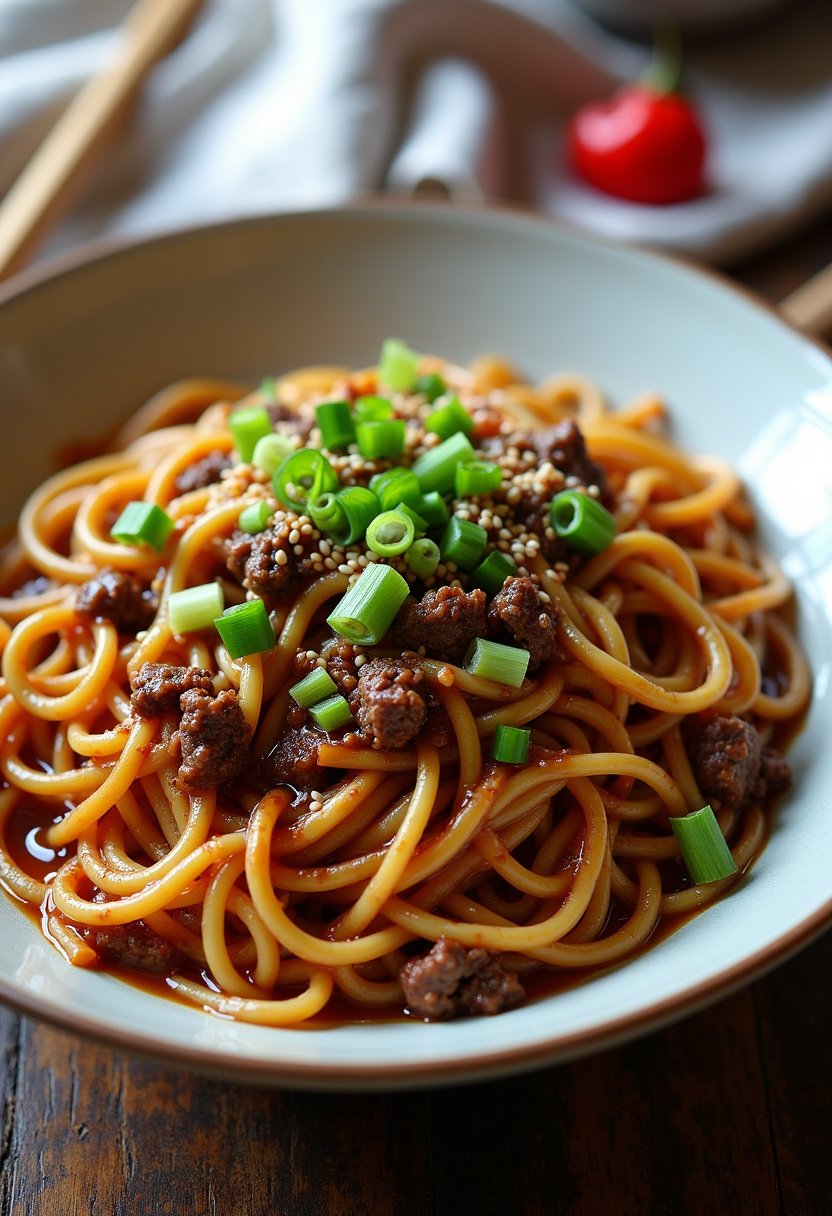
Frequently Asked Questions
Can I use a different type of meat instead of ground beef?
Absolutely! While ground beef is the star of this particular dish, you can easily swap it out for other proteins. Ground turkey or chicken are excellent alternatives if you’re looking for a leaner option. Just be aware that these meats might cook a bit faster than beef, so keep an eye on them to avoid overcooking. For a vegetarian twist, consider using crumbled tofu or tempeh. Both will absorb the flavors beautifully and provide a delightful texture.
How can I prevent the noodles from becoming mushy?
Ah, the dreaded mushy noodle dilemma. To keep your noodles perfectly al dente, cook them just shy of the package instructions since they’ll continue to cook when tossed with the beef mixture. Rinse them under cold water immediately after draining to stop the cooking process. If you’re using fresh noodles, just a quick dip in boiling water should suffice. Remember, nobody wants a mushy noodle—firm and springy is what we’re aiming for!
Is there a way to make this dish ahead of time?
Indeed, this recipe is make-ahead friendly! You can prepare the ground beef mixture a day or two in advance. Store it in an airtight container in the refrigerator. When you’re ready to serve, reheat the beef mixture gently on the stove and toss in freshly cooked noodles. This way, you maintain the dish’s fresh taste and texture. Just remember to save some freshly chopped green onions to sprinkle on top for that fresh pop of flavor.
What’s the best way to store and reheat leftovers?
To store any leftovers, transfer the cooled noodles and beef into an airtight container. They should be good in the refrigerator for up to 3 days. When reheating, add a splash of water or broth to the pan to prevent the noodles from drying out. Heat over medium-low heat until warmed through. A microwave will also work in a pinch, but again, add a bit of liquid to retain moisture.
Can I adjust the level of sweetness in the sauce?
Of course! The balance of sweet and savory is what makes this dish shine, but it’s entirely customizable to fit your taste buds. If you prefer a less sweet version, reduce the amount of brown sugar by half and taste the sauce before adding more. Alternatively, you can add a splash of soy sauce or a pinch of red pepper flakes to deepen the savory notes if a spicier kick is desired. Remember, your kitchen is your kingdom—feel free to adjust as you see fit!
Final Thoughts
And there you have it, a bowl of Mongolian Ground Beef Noodles that’s not only delicious but also a testament to the fact that quick and easy doesn’t have to mean sacrificing flavor. This dish is your ticket to a restaurant-quality meal right in the comfort of your own kitchen, complete with the aromatic allure of ginger and garlic wafting through the air, and the mouthwatering sizzle of beef in the pan. It’s a symphony of flavors that play perfectly together, like a well-rehearsed orchestra.
In creating this dish, you’ve tapped into the wonderful tradition of Mongolian cuisine, known for its bold flavors and simple yet satisfying preparations. You’ve successfully combined savory soy sauce, sweet brown sugar, and a touch of heat from chili flakes, transforming humble ground beef and noodles into a meal that’s both comforting and exotic. It’s a perfect dance of textures, from the tender beef to the slightly chewy noodles, all coated in a glossy, umami-rich sauce.
Whether you’re a busy home cook or someone just starting on their culinary journey, this recipe is sure to become a staple in your weekly rotation. It’s versatile enough to invite your creativity—consider adding your favorite vegetables or swapping the beef for chicken or tofu for a different twist. And remember, the secret to great cooking is not just in following a recipe, but in making it your own.
So, the next time you’re craving something that’s both quick to prepare and deeply satisfying, reach for this Mongolian Ground Beef Noodles recipe. It’s a dish that promises not just a meal, but an experience—a little taste of culinary magic in every bite. Happy cooking, and may your kitchen always be filled with the sounds of sizzles and the scents of deliciousness!


Leave a Reply