

There are few aromas more enticing than the savory, sweet, and slightly spicy notes that waft through the air when Korean beef is sizzling away on the stove. It’s a smell that can bring an entire household to the kitchen, curiosity piqued and stomachs growling. This Korean Beef Recipe is not only a feast for the senses but also a tribute to the rich culinary heritage of Korea, where bold flavors and heartwarming comfort food go hand in hand.
Imagine tender strips of beef, marinated in a luscious concoction of soy sauce, garlic, ginger, and a hint of brown sugar, all caramelizing to perfection. The flavor profile is a harmonious balance of umami depth, subtle sweetness, and just the right amount of heat, courtesy of a little gochujang or red pepper flakes. Each bite delivers a succulent, flavor-packed punch that’s both exotic and comforting—a true treat for your taste buds.
This dish is perfect for anyone looking to spice up their dinner routine with something both exotic and effortless. Despite its complex flavors, this recipe is surprisingly simple and quick to make, requiring about 30 minutes from start to finish. It’s an ideal choice for both seasoned cooks and those just beginning their culinary journey, as it doesn’t demand any intricate techniques or hard-to-find ingredients. Just a little bit of slicing, stirring, and sizzling, and you’re on your way to a delicious meal.
So, whether you’re a lover of Korean cuisine or simply in the mood for something different and delightful, this Korean Beef Recipe is sure to impress. It’s a dish that promises to turn an ordinary weeknight dinner into an extraordinary dining experience—no passport required.
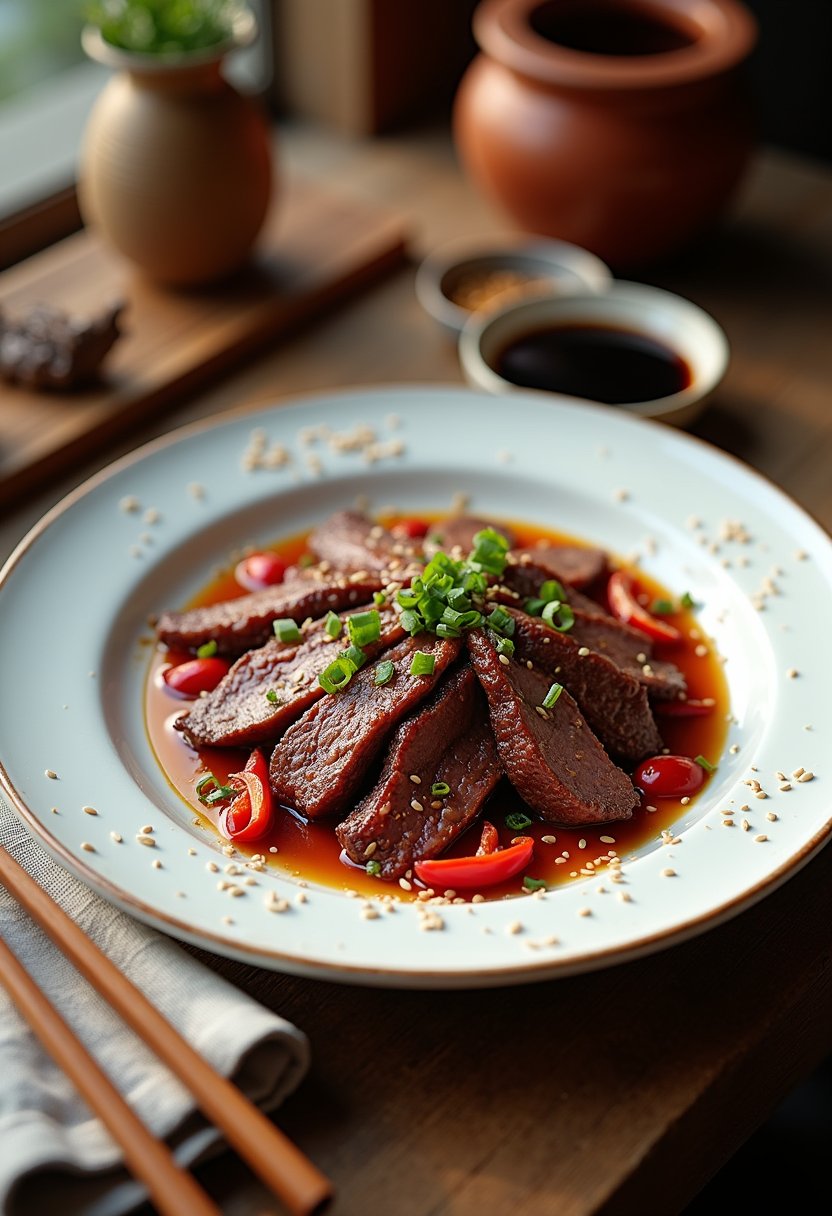
The Story Behind This Recipe
In the delightful world of Korean cuisine, where flavors dance and textures sing, the Korean Beef recipe stands as a testament to tradition and innovation. Its origins are as rich and layered as the dish itself, with a history that weaves through time like a finely sewn hanbok—a traditional Korean dress.
The backbone of this culinary treasure is bulgogi, a term that literally translates to “fire meat.” Bulgogi has been a staple in Korean households for centuries, primarily featuring beef or pork marinated in a concoction of soy sauce, sugar, sesame oil, garlic, and pepper—ingredients that sing in harmony like a well-rehearsed choir. The use of beef in Korean cuisine dates back to the Goguryeo period (37 BC–668 AD), where it was enjoyed by royalty and common folk alike.
This dish’s evolution mirrors Korea’s own journey through eras of prosperity, war, and cultural exchange. The introduction of soy sauce from China during the Goryeo Dynasty (918–1392 AD) added a new dimension to the marinade, while the later addition of garlic and sesame oil during the Joseon Dynasty (1392–1897 AD) brought a depth and complexity that transformed the dish into the beloved classic we know today.
In recent years, the Korean Beef recipe has found its way into international kitchens, captivating hearts with its savory-sweet allure. Its global popularity can be attributed to the Korean Wave—Hallyu—which has spread Korean culture, including its cuisine, across the globe. Thanks to this cultural surge, Korean Beef has become more than just a meal; it’s a culinary ambassador, introducing people worldwide to the vibrant flavors of Korea.
So, the next time you bite into that tender, marinated beef, you’re not just savoring a delicious dish. You’re tasting a piece of history, a story that spans centuries, bringing together the past and present in a sumptuous bite.
Ingredients
Let’s embark on this flavorful journey to create a delicious Korean Beef dish, a culinary delight that marries savory, sweet, and spicy notes in perfect harmony. Here’s what you’ll need to make this mouthwatering meal:
For the Marinade:
- 500g (1 lb) beef sirloin: Thinly sliced against the grain for tenderness. You can substitute with ribeye or flank steak if preferred.
- 60 ml (1/4 cup) soy sauce: Opt for a good-quality soy sauce, as it forms the backbone of the marinade’s flavor.
- 2 tablespoons brown sugar: Adds a caramelized sweetness, balancing the soy sauce’s saltiness.
- 2 tablespoons sesame oil: Toasted sesame oil is best for its rich, nutty aroma.
- 3 cloves garlic, minced: Fresh garlic imparts a pungent, aromatic depth. Avoid garlic powder, as it lacks the same vibrancy.
- 1 tablespoon grated ginger: Fresh ginger offers a spicy warmth and slight zest; ground ginger won’t provide the same intensity.
- 1 tablespoon rice vinegar: This adds a subtle tang; apple cider vinegar can be a substitute if needed.
- 1/2 teaspoon black pepper: Freshly ground for a bit of heat and complexity.
For the Cooking:
- 1 tablespoon vegetable oil: High smoke point oils like canola or sunflower also work well for searing the beef.
- 1 onion, thinly sliced: Adds sweetness and texture; yellow or white onions are preferred.
- 2 green onions, chopped: For garnish; they add a fresh, peppery finish.
Optional Garnishes:
- 1 tablespoon sesame seeds: Toast them lightly for an extra crunch and enhanced flavor.
- 1/2 teaspoon red pepper flakes: For those who like a bit more heat.
Serving Suggestions:
- Steamed rice: To soak up all that delicious sauce.
- Kimchi: For an authentic Korean touch, adding a spicy, fermented zing.
All these ingredients are your ticket to a flavor-packed Korean beef experience. Most of these items can be found in your local grocery store, but if you’re having trouble with the sesame oil or kimchi, a trip to an Asian market or a quick online search should do the trick. With everything ready, you’re now set to create a dish that’s as comforting as it is exciting!
Step-by-Step Instructions
- Prepare the Marinade
Begin by combining 120 ml (1/2 cup) of soy sauce, 60 ml (1/4 cup) of sesame oil, 50 g (1/4 cup) of brown sugar, 4 finely chopped garlic cloves, 1 tablespoon of grated ginger, and 1 teaspoon of freshly ground black pepper in a large mixing bowl. Stir until the sugar dissolves and you have a fragrant, sweet, and salty concoction that smells like a cozy evening in a Korean barbecue joint. - Marinate the Beef
Slice 500 g (1.1 lbs) of beef sirloin or ribeye into thin strips, about the thickness of a pencil. Make sure your knife is sharp for clean cuts. Submerge the beef strips into the marinade, ensuring each piece is well-coated. Cover the bowl with plastic wrap and let it rest in the refrigerator for at least 30 minutes, or up to 2 hours if you can resist the temptation. This allows the flavors to infuse deeply into the meat, resulting in a tender and flavorful bite. - Heat the Pan
Once marination is complete, heat a large non-stick skillet or wok over medium-high heat. Add a splash of vegetable oil—just enough to lightly coat the bottom. You’ll know it’s ready when a drop of water sizzles and evaporates upon contact. - Cook the Beef
Drain the beef from the marinade, shaking off excess liquid (save the marinade for later). Carefully add the beef strips to the hot pan in a single layer. Allow them to sear for about 2-3 minutes on each side, or until they develop a rich brown color and crispy edges. Stir occasionally but not too often; you want that glorious caramelization to occur. - Reduce the Marinade
Once the beef is beautifully charred and cooked through (brown all over and juices have reduced, no pink), remove it from the pan and set aside. Pour the reserved marinade into the same pan and bring it to a gentle boil. Reduce the heat to low and let it simmer for about 3-5 minutes, or until it thickens slightly. This step intensifies the flavors, creating a glossy sauce that will cling lovingly to the beef. - Combine and Garnish
Return the beef to the pan, tossing it in the thickened sauce until every strip is gloriously coated. Turn off the heat. Sprinkle generously with 2 tablespoons of toasted sesame seeds and 2 finely chopped spring onions for that quintessential Korean flair. The aroma will be irresistible—nutty, sweet, and savory all at once. - Serve and Enjoy
Serve your Korean beef hot, ideally over a bed of steaming white rice or alongside some crisp lettuce leaves for wrapping. The contrast between the savory beef and fresh greens is a match made in culinary heaven. Don’t forget to have some kimchi on the side for an authentic touch.
Remember, the internal temperature of the beef should be at least 63°C (145°F) for safe consumption. Keep a meat thermometer handy to ensure culinary accuracy and safety. Enjoy your delicious creation, and prepare for your kitchen to transform into a Korean street food paradise!
Tweaks and Additions
If you’re looking to spice things up or cater to specific dietary needs, this Korean Beef Recipe is as versatile as a Swiss Army knife. Here are some delightful tweaks and additions that will have you salivating before the first bite.
1. Spicy Kick with Gochujang
For those who like to feel the heat, adding gochujang—a Korean red chili paste—can transform your dish into a spicy sensation. Start with 1 tablespoon of gochujang and adjust according to your tolerance. This addition will lend a deeper, fiery flavor and a touch of sweetness, making the dish irresistibly complex. The cooking time remains the same, but be sure to stir continuously to ensure even distribution.
2. Low-Sodium Soy Sauce Alternative
If you’re watching your sodium intake, swap regular soy sauce for a low-sodium version. This change won’t drastically alter the cooking process or time but will help keep your blood pressure in check while still delivering that umami punch. You may want to taste and adjust the seasoning towards the end to ensure your beef still bursts with flavor.
3. Vegetarian Twist with Tofu
For a vegetarian version, substitute the beef with firm tofu. Cut the tofu into cubes and marinate them in the same sauce blend. Pan-fry until golden on each side, which should take about 3-4 minutes per side. The texture will be different—a bit softer and creamier—but the taste will still be rich and satisfying. Cooking times are slightly reduced, making this a quick and delicious alternative.
4. Gluten-Free Tamari Sauce
For gluten-free folks, replace soy sauce with tamari. Tamari is typically gluten-free and offers a similar, if not slightly richer, flavor profile. This swap requires no additional adjustments to the cooking process or times, ensuring you can enjoy all the savory goodness without any gluten-related worries.
5. Aromatic Sesame Variation
Introduce a nutty aroma by toasting sesame seeds and adding them as a garnish. Simply toast 2 tablespoons of sesame seeds in a dry pan for a few minutes until they’re golden and fragrant. Scatter them over the finished dish for an added layer of texture and flavor. This tweak doesn’t affect cooking time but elevates the dish with a delightful crunch.
With these tweaks and additions, you can tailor your Korean Beef experience to suit your palate or dietary needs, ensuring each meal is as unique and enjoyable as you are. Happy cooking!
Decorating Tips
Elevating Your Korean Beef Presentation
Ah, the irresistible allure of Korean beef—its savory-sweet flavor profile demands an equally stunning presentation. After all, we eat with our eyes first, and a well-decorated dish can elevate a meal from ordinary to extraordinary.
The Art of Garnishing
Garnishing Korean beef isn’t just about tossing some herbs on top and calling it a day. It’s an art form! Start with a sprinkle of thinly sliced green onions. These emerald ribbons not only add a pop of color but also contribute a subtle oniony bite that enhances the dish’s flavor. If you’re feeling particularly fancy, try adding toasted sesame seeds. Their nutty flavor and delightful crunch are a perfect complement to the tender beef.
Color and Contrast
Consider adding a vibrant vegetable side to your plate. Kimchi, with its fiery red hue and tangy taste, pairs beautifully with Korean beef. Not only does it provide a fantastic color contrast, but its acidity also cuts through the richness of the beef. Alternatively, julienned carrots or bell peppers tossed in a light sesame oil dressing can add both color and crunch.
Plating with Precision
When it comes to plating, think minimalist elegance. Use a wide, flat plate to give each element room to breathe. Arrange the beef in a neat pile or fan it out across the plate. Place your garnishes with intention—scattering them haphazardly might suggest a carefree spirit, but precision suggests mastery.
Saucy Details
Don’t forget the sauce! A drizzle of your beef’s marinade, reduced to a glossy glaze, can add both sheen and flavor. Use a spoon to artfully dribble it across the meat, or go avant-garde with a few strategically placed dots around the rim of the plate.
The Finishing Touch
Finally, for a touch of elegance, consider garnishing with edible flowers such as nasturtiums or violets. Their delicate petals add a whimsical touch and are sure to impress your dinner guests.
Remember, the goal is to create a visual feast that matches the robust flavors of your Korean beef. With these tips, you’re not just serving dinner; you’re serving an experience. Bon appétit—or as they say in Korea, 맛있게 드세요 (mas-issge deuseyo)!
Serving Suggestions
When it comes to serving your sumptuous Korean beef, you’re about to enter a world of flavors and textures that will dance on your taste buds like a K-pop concert in your mouth. The key is to balance the savory, sweet, and spicy notes of the dish with complementary sides and garnishes that enhance its bold character.
Classic Pairings
A steaming bowl of fluffy short-grain white rice is the traditional canvas upon which your Korean beef masterpiece can shine. The slightly sticky texture of the rice plays beautifully against the tender, juicy slices of beef, soaking up the savory soy glaze like a sponge. If you’re feeling adventurous, swap the white rice for nutty brown rice or even quinoa for a healthier twist.
Pickled Perfection
No Korean meal is complete without the tangy crunch of kimchi. This fermented cabbage dish not only adds a spicy, sour punch but also provides a probiotic boost to your meal. If kimchi isn’t readily available, a quick pickled cucumber salad with rice vinegar, sesame oil, and a sprinkle of toasted sesame seeds can offer a refreshing contrast to the rich beef.
Vegetable Sides
Consider serving your Korean beef with sautéed greens such as spinach or bok choy, seasoned with garlic and a touch of soy sauce. Their bright green color and slight bitterness provide a lovely counterpoint to the hearty beef. Additionally, a side of steamed or roasted vegetables like broccoli, carrots, or bell peppers can add color and additional nutrients to your plate.
Wrap It Up
For a fun, interactive dining experience, serve the beef with a platter of crisp lettuce leaves. Encourage your guests to wrap the beef in the leaves, perhaps with a dab of gochujang (Korean chili paste) for extra heat, creating a delightful hand-held bite that’s bursting with flavor.
Finishing Touches
Garnish your Korean beef with a sprinkle of chopped green onions and a handful of toasted sesame seeds to add a final layer of aroma and flavor. A drizzle of sesame oil can also provide a nutty, fragrant note that ties the dish together.
With these serving suggestions, your Korean beef dish will be not only a feast for the palate but also a visual delight. Whether you’re hosting a dinner party or enjoying a quiet night in, these accompaniments will ensure your meal is as authentic and satisfying as possible. Enjoy your culinary adventure!
Troubleshooting Common Issues
So, you’re diving into the world of making Korean beef, and let me guess: something went a bit awry? Fear not, intrepid chef, because we’ve all been there. Let’s unravel some common issues and get you back on track to deliciousness.
Issue #1: Beef is Too Tough
Is your beef as chewy as a rubber boot? This often happens if you rushed through the marinating process or used the wrong cut of meat. Korean beef loves a good soak—aim for at least 30 minutes, but longer is better, even up to 24 hours if you have the time. If you’re using a cut like brisket or flank, slice it thinly against the grain to break up those muscle fibers.
Issue #2: The Sauce is Too Salty
Did you accidentally create a salt lick instead of a sauce? It’s easy to overdo it with soy sauce. To balance the saltiness, add a bit more sugar or honey to sweeten things up. If you want to tone down the flavor without adding sweetness, a splash of rice vinegar or a squeeze of lime can work wonders. Just be sure to taste as you go—remember, you can always add more, but it’s tricky to take away.
Issue #3: Lack of Flavor Depth
If your dish tastes a bit flat, it might be crying out for some umami-rich friends. Consider adding a dash of fish sauce or a sprinkle of toasted sesame seeds. These add depth that will make your taste buds do a little happy dance. And don’t forget about freshly grated ginger and garlic—they’re not just for aromatics, they bring zing and warmth.
Issue #4: Burning Meat or Sauce
If your beef is sticking to the pan or the sauce is catching fire, you might be cooking at too high a temperature. Korean beef should be cooked over medium-high heat; too hot, and you’ll char instead of caramelizing. Also, ensure your pan is adequately oiled and preheated before anything touches it. If it’s too late and the damage is done, you might scrape off the burnt bits and add a splash of water or broth to salvage the rest.
Issue #5: Sauce Not Thickening
If your sauce refuses to thicken, it could be the result of too much liquid or insufficient heat. Try letting it simmer uncovered to reduce the liquid. Alternatively, you can whisk in a cornstarch slurry (1 tablespoon cornstarch mixed with 2 tablespoons cold water) and let it cook for a minute or two until it thickens to your liking.
Every culinary adventure comes with its hiccups, but with these tips, you’re well-equipped to tackle any Korean beef conundrum. Remember, the best cooks are made not from perfect dishes, but from learning how to fix the imperfect ones!
Frequently Asked Questions
Can I use a different cut of beef for this recipe?
Absolutely! While traditional Korean beef recipes often call for cuts like ribeye or sirloin due to their tenderness and marbling, you can certainly experiment with other cuts. Flank steak or skirt steak are fantastic alternatives—they’re flavorful and become tender when sliced thinly against the grain. If you’re feeling adventurous, try using brisket for a richer taste, but be sure to allow for a longer cooking time to achieve that melt-in-your-mouth texture.
What can I substitute for gochujang if I can’t find it?
Gochujang, the spicy and sweet Korean chili paste, is a key ingredient in many Korean dishes. If you can’t find it, a good substitute is a mix of miso paste and Sriracha. Combine 2 tablespoons of miso paste with 1 tablespoon of Sriracha, and adjust to taste. This won’t perfectly replicate gochujang’s unique flavor, but it will mimic its balance of heat, sweetness, and umami.
Can I make this recipe ahead of time?
Yes, this Korean beef recipe is perfect for meal prep. You can marinate the beef up to 24 hours in advance to allow the flavors to penetrate deeply. Once cooked, the beef can be stored in an airtight container in the refrigerator for up to 3 days. This makes it a great option for quick weekday meals—simply reheat and serve with fresh vegetables and rice.
What’s the best way to store and reheat leftovers?
To store leftovers, place the cooked beef in an airtight container and refrigerate for up to 3 days. When reheating, use a skillet over medium heat to warm the beef evenly and maintain its succulence. Avoid microwaving as it may cause the beef to become tough. Add a splash of water or broth during reheating to help keep the meat juicy.
Why is my beef tough after cooking?
If your beef turns out tough, it could be due to overcooking or cutting it incorrectly. Ensure you slice the beef thinly against the grain—this shortens the muscle fibers, making each bite more tender. Additionally, be cautious not to overcook the beef. A quick sear over high heat is sufficient, leaving the inside slightly pink for optimal tenderness. If you’re using a tougher cut, consider marinating longer to help break down the proteins.
Final Thoughts
And there you have it – a delicious journey into the heart of Korean cuisine, all wrapped up in a delightful Korean Beef dish. I hope you’re as thrilled with the flavors as I am. The savory and slightly sweet notes, the umami burst from the soy sauce, and that gentle hint of ginger and garlic all contribute to a meal that’s both comforting and exciting. It’s like a warm hug from your taste buds.
The beauty of this recipe lies in its simplicity and adaptability. Whether you’re a seasoned chef or a kitchen novice, this dish invites you to experiment and personalize. Perhaps next time, you’ll try it with a touch of gochujang for some extra heat, or maybe you’ll add a sprinkle of sesame seeds for a nutty finish. The possibilities are endless, and that’s the magic of cooking – it’s your canvas.
Remember, cooking is as much about the journey as it is about the destination. So, if you found yourself with a little soy sauce on your shirt or some ginger on the floor, don’t fret. These are badges of honor in the culinary world, proof that you dared to create and explore.
Lastly, let’s not forget the cultural richness that accompanies each bite. Korean Beef, with its roots steeped in centuries of tradition, offers a taste of a culture that values harmony in flavor and in life. As you savor your homemade Korean Beef, take a moment to appreciate the stories and histories that have mingled to create this remarkable dish.
So, go ahead – invite friends over, share a meal, and let this Korean Beef recipe be the star of your next gathering. And as always, keep cooking, keep experimenting, and keep enjoying every delicious moment. Until next time, happy cooking!


Leave a Reply